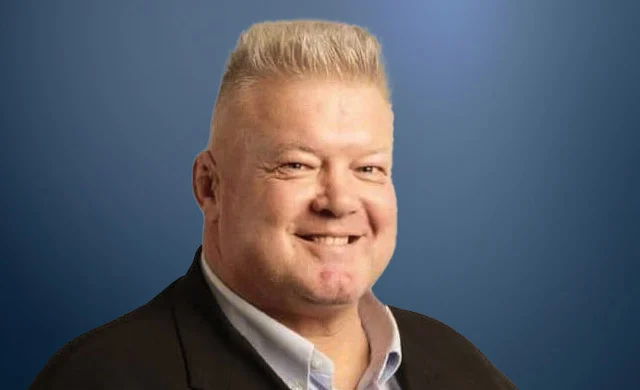
Sustainability strategist, environmental risk expert, keynote speaker, and facilitator
Corporate leaders, sustainability teams, mining and infrastructure stakeholders, government departments, and professional groups seeking clarity on water risk, environmental governance, and resilient decision-making.
Dr Anthony Turton is a leading authority on water strategy, sustainability, and risk leadership in South Africa, known for his uncompromising stance on scientific integrity and transparent environmental governance. With a strong public profile, he is widely recognised for his work on acid mine drainage (AMD), wastewater mismanagement, and the systemic risks facing South Africa’s water supply. His insights draw on decades of experience across science, policy, national security, and conflict environments, allowing him to address the complexities of decision-making under uncertainty with uncommon depth and clarity.
Dr Turton holds professorships at two respected institutions: the Centre for Environmental Management at the University of the Free State, and the UNESCO Chair in Groundwater Management at the University of the Western Cape. His advisory work extends into the mining sector, where he contributes to the development of investment strategies for brownfields rehabilitation and long-term environmental resilience.
A 12th-generation African and former soldier turned poet, he is deeply committed to nation-building and reconciliation. His storytelling ability and lived experience enable him to connect scientific reality with human impact, empowering audiences to understand both the urgency and the opportunity embedded in South Africa’s water challenges.
Dr Anthony Turton has a high media profile, most notably regarding the issue of acid mine drainage (AMD) and water quality arising from waste water mismanagement.
He works into the mining space where he is part of a team developing a new investment case for Brownfields site rehabilitation.
He holds two Professorships: in the Centre for Environmental Management at the University of the Free State; and in the UESCO Chair in Groundwater Management at the University of Western Cape.
Dr Anthony Turton can speak on leadership challenges arising from decision-making under conditions of uncertainty and inherently high risk. As a soldier-poet he is active among the veteran community encouraging the catharsis of recognition for the role played by all, irrespective of which side they fought on.
He is a nation-builder and story-teller, deeply embedded in his roots as a 12th generation African.
Dr Anthony Turton achievements & accolades:
– In 2009, he earned the Habitat Council Award for his ‘principled stance in defence of the public to be informed of the truth … and the courage that he displayed in publishing the state of our water resources, thereby refusing to compromise his scientific integrity’
– In 2010, he earned the Nick Steele Memorial Award, given to him by SAM Miller in recognition of his work on AMD as a strategic national problem
– In 2012, he was given the Green Globe Award in 2012 in recognition for his work in sustainability.
– In 2015 his work was published in the first anthology of bush war poetry in the book “Nubes Belli” (Clouds of War).
– His book Shaking Hands with Billy forms the basis of many of the leadership lessons he can speak of.
Dr Anthony Turton is available for professional engagements as a speaker or facilitator where sustainability and corporate leadership are required.
Anthony Turton, a 12th generation African and direct descendent of a member of Jan van Riebeek’s original party, served in various capacities in the security forces of South Africa. Dr Anthony Turton core skills are intelligence support to decision-makers operating under conditions of high risk with incomplete information often from contested sources.
Initially deployed as a crew commander in an armoured unit, he later became the unit specialist in mine warfare and IED’s (Improvised Explosive Devices). He was recruited into a deep cover offensive counter espionage (CE) unit (O61/01) in the National Intelligence Service (NIS). This gave him direct exposure to offensive CE operations run on foreign hostile soil. After the Pretoria car bomb detonated, a Special Operations (SO) unit was created within the Chief Directorate Covert Operations (CDCO) of the NIS designated K43.
The mission given to K43 was the capture of the MK Chief of Staff, code named Billy, with the sole intention of bringing him home to stand trial for terrorism. This unit was based on the successful Mossad operations to counter the Munich Olympics Massacre and to capture Adolf Eichmann. Within K43 a combination of CE and SO skills were merged into a potent team of professionals operating under deep cover in foreign hostile environments.
As a Keynote Speaker Dr Anthony Turton is often commissioned by professional bodies to set a specific theme for one of their national or international symposia or conferences. I usually do this with a written paper (available in the My Scientific Papers section of thie website) that enters the official proceedings, supported by a PowerPoint presentation in which I emphasise specific points made in the paper.
Under these circumstances Dr Anthony Turton uses a very simple PowerPoint format, often based extensively on images and/or maps, but hardly any text. This allows me to judge my audience at the time of the presentation and adapt accordingly, using the images to illustrate the point I wish to make. This flexibility gives me a wider latitude than a pre-worded PowerPoint presentation. This example comes from a presentation commissioned by the Swedish Foreign Ministry given to the Mekong River Commission in Chiang Rai Thailand.
Contact us at Speakers Inc and subscribe to our YouTube channel
This 20 minute 18 second TEDxCapeTown talk weaves together Dr Anthony Turton’s childhood experiences, his scientific career, and his deep concern for South Africa’s environmental future. He begins by reflecting on Chinese symbolism, Descartes’ philosophy, and the tension between humanity’s desire to control nature and nature’s inherent power. Turton shares vivid memories of growing up in the African wilderness, where he developed a lifelong sense of awe and humility in relation to the natural world. These early experiences shaped his scientific curiosity and inspired his desire to contribute to human knowledge.
His story then shifts to his young adulthood, marked by a war that turned his generation into soldiers and exposed him to violence on a scale that reshaped his worldview. Alongside the violence of man against man, he became aware of a second, quieter violence: society’s destructive impact on nature. This realisation led him into years of study in engineering philosophy, environmental science, and the national economic model built on mining. He explains how mining’s “violence against nature” created vast environmental liabilities, including 430 000 tons of low-grade uranium waste discarded across the Witwatersrand.
Turton details the mechanics and consequences of acid mine drainage (AMD), describing how abandoned mine voids fill with water and produce a toxic mix of acidity, heavy metals, and radioactivity. He recounts his efforts at the CSIR to launch the “Tooth Fairy Project,” a high-confidence epidemiological study aimed at evaluating exposure risks for children living downstream of mining areas. The project was halted, leading to professional repercussions he identifies as early evidence of institutionalised suppression and the difficulty of addressing slow-onset environmental disasters.
This 3 minute 55 second clip features Dr Anthony Turton explaining why he believes South Africa is not experiencing a water crisis in the traditional resource sense but is instead facing what he calls a “crisis of critical thinking.” He clarifies that the country possesses enough water to function effectively, yet mismanagement, poor planning, and institutional failures have created the perception of inevitable scarcity.
Turton describes how key water infrastructure has been allowed to degrade and how the systems designed to treat, recycle, and distribute water have not been maintained or expanded to match population and industrial growth. He emphasises that technical solutions exist and that water can be reclaimed, reused, and repurposed safely, but decision-makers often fail to apply evidence-based reasoning or long-term strategic thinking.
He warns that short-term political priorities frequently overshadow sound engineering principles, resulting in underinvestment, inadequate maintenance, and reactive crisis management. Turton argues that the real challenge is cultivating leadership capable of understanding complex scientific information, asking the right questions, and making decisions grounded in logic rather than ideology.
Throughout the clip, he reinforces that water availability is not the country’s primary limitation. Instead, South Africa needs a cultural shift in how problems are diagnosed and solved. The lack of critical thinking, he notes, prevents the adoption of proven technologies, inhibits collaborative planning, and undermines resilience.
Speaker fees can vary depending on factors such as expertise, demand, and event specifics. While some speakers may charge a flat fee for their services, others may have hourly rates. It’s best to discuss fee structures directly with the speaker or their representative to understand the pricing model.
Virtual speaking appearances can indeed offer cost savings compared to in-person events. Virtual speaking rates are often 10-50% cheaper than in-person rates due to factors such as reduced travel expenses and logistics. This makes virtual events a cost-effective alternative for organizations looking to book speakers within a budget.
Keynote speeches typically range from 30 to 90 minutes, with the duration determined by the speaker’s expertise, the event’s agenda, and audience preferences. Keynote speeches often include a combination of inspirational stories, practical insights, and actionable advice tailored to the event’s theme or objectives.
The scale of the event and audience size can indeed impact a speaker’s fee. Larger events with a broader reach or higher attendance may command higher fees due to increased exposure and demand. Conversely, smaller events or niche audiences may offer opportunities for more flexible pricing arrangements.
Travel expenses such as transportation, accommodation, and meals are typically negotiated separately from the speaker’s fee. These costs vary depending on the speaker’s location, travel distance, and event duration. It’s important to clarify travel arrangements and expenses during the booking process to avoid misunderstandings.
Many speakers require a deposit to secure a booking, with the remaining balance due closer to the event date. Deposits are often non-refundable and serve as a commitment from both parties. It’s advisable to discuss deposit requirements and payment terms with the speaker or their representative when finalizing the booking.
Ready to find the perfect speaker for your event? Use our advanced search feature or contact us to get started today!



No results available
These remain the property of its owner and are not affiliated with or endorsed by Speakers Inc.
All talent fees exclude VAT, travel and accommodation where required.
Our Mission
Our Mission:
© All rights reserved 2025. Designed using Voxel