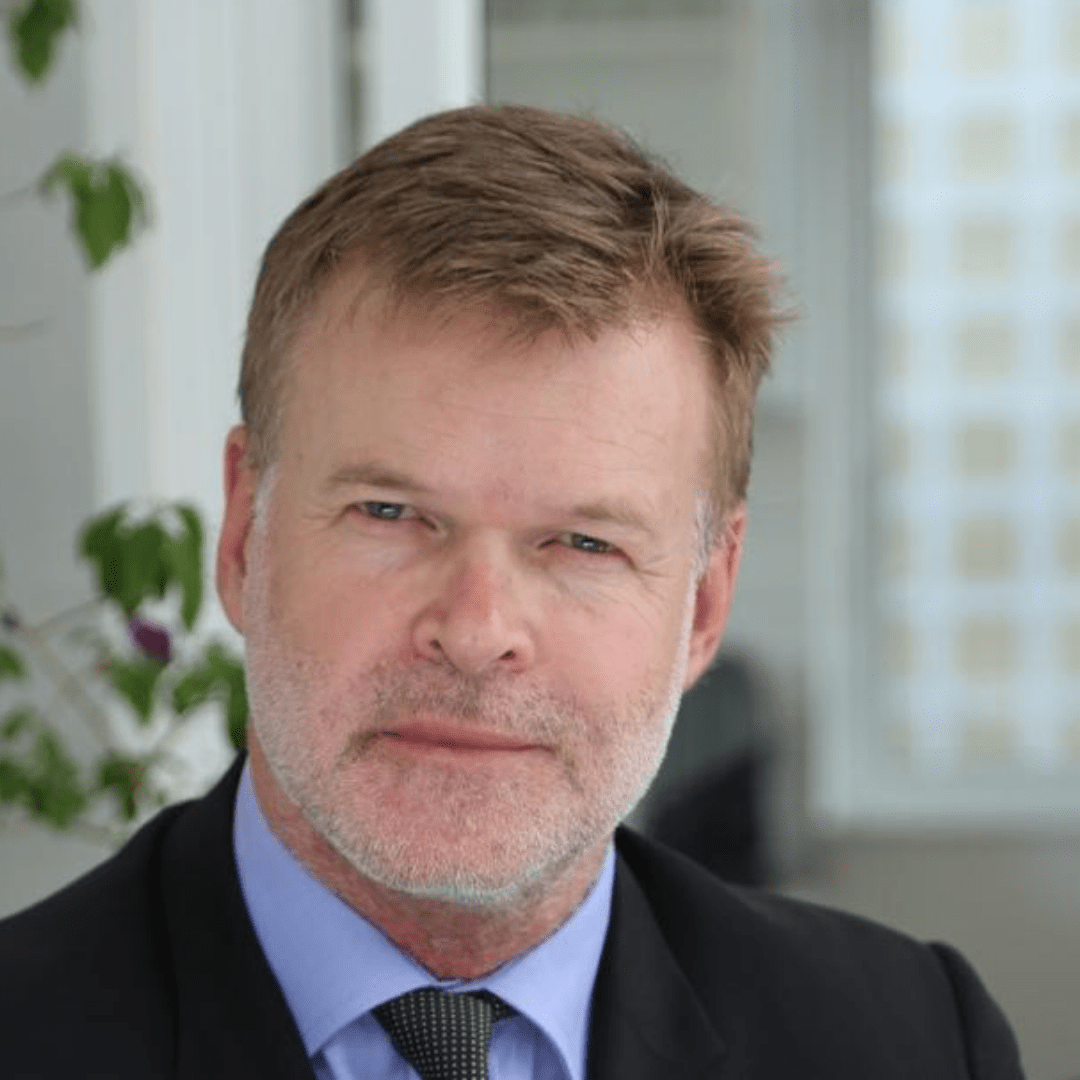
Prof Richard Calland: Ethical Politics

Constitutional law expert and governance strategist Prof Richard Calland empowers leaders and institutions with deep insights on transparency, accountability, sustainable development, and democratic resilience.

Quick Facts:

Highlights:
  • Associate Professor in Public Law at the University of Cape Town
  • Specialist in constitutional law, human rights, administrative justice, and whistleblower protection
  • Founder of the Open Democracy Advice Centre (ODAC)
  • Former IDASA programme manager shaping democratic governance in South Africa
  • Member of the World Bank Independent Access to Information Appeals Board

Formats:

Keynote speaker and governance, ethics, and legal reform expert


Audiences:

Government leaders, policy institutions, legal communities, civil society, corporate governance teams, and organisations focused on transparency and sustainable development


Outcomes:
  1. Deep insights into constitutional governance, public accountability, and transparency reform.
  2. Practical frameworks for strengthening institutional ethics and access to information.
  3. Strategic perspectives on climate finance, sustainable development, and democratic resilience
Reading time: 3 min
Reviews: (0 reviews)
  • Travels from: Cape Town

Keynote Topics

Talent Short Bio

Prof Richard Calland is a leading authority on constitutional and human rights law, democratic governance, and sustainable development. For more than two decades, he has shaped policy, strengthened accountability systems, and supported institutions across Africa and the world in advancing transparency and good governance. As an Associate Professor in Public Law at the University of Cape Town, he teaches constitutional, human rights, and administrative law, and is widely respected for his expertise in access to information, whistleblowing protection, administrative justice, and public ethics.

Prof Calland’s contribution to South Africa’s democratic landscape is extensive. From 1995 to 2003, he served as programme manager for the Political Information & Monitoring Service at IDASA, Africa’s foremost democracy think tank. In 2000, he founded the Open Democracy Advice Centre (ODAC), where he led advocacy efforts, advised whistleblowers, advanced law reform, and pursued precedent setting litigation to strengthen the right to know.

Internationally, he is recognised for his work on freedom of information law, serving on the World Bank’s Independent Access to Information Appeals Board and advising governments in Mali, Peru, Nicaragua, Bolivia, and Jamaica on transparent governance.

Prof Richard Calland teaches constitutional and human rights law, and some administrative law. He specializes in the law and practice of the right to access to information and whistleblowing protection; in administrative justice; in public ethics; and in constitutional design – largely derived from his work as programme manager of the Political Information & Monitoring Service at Institute for Democracy in South Africa (IDASA) – the leading democracy think tank in Africa – which he led from its inception in 1995 until 2003.
 
In 2000, he founded the Open Democracy Advice Centre (ODAC), a law centre based in Cape Town, which promotes the ‘right to know’, advising whistleblowers, advocating law reform and taking test case litigation on access to information.
 
Prof Richard Calland has for over twenty years been working in the fields of democratic governance and sustainable development in South Africa and beyond. Based at the University of Cape Town (UCT), where he is Associate Professor in Public Law, he built and led its Democratic Governance & Rights Unit from 2007-2016. Prof Richard Calland specializes in freedom of information law and serves as a member of the Independent Access to Information Appeals Board of the World Bank.
 
In the past, he has advised the governments of Mali, Peru, Nicaragua, Bolivia and Jamaica on transparency law reform and policy, and the Construction Sector Transparency Initiative (CoST) on matters of governance and multi-stakeholder process. In 2015, he was retained by the US Securities Exchange Commission as an expert witness in its prosecution of Hitachi under the Foreign Corrupt Practices Act.

Prof Richard Calland is a Fellow of the University of Cambridge Institute for Sustainability Leadership, and has been a member of faculty on a series of strategic leadership programmes for, amongst others, the World Bank, the African Development Bank, PWC, Nedbank, Namdeb, Network Rail and Tata. He is also the co-director of the niche organisation, the African Climate Finance Hub, supporting governments and multilateral organisations in Africa on issues relating to access and use of climate finance.

The face of power in South Africa is rapidly changing – for better and for worse. The years since Thabo Mbeki was swept aside by Jacob Zuma’s ‘coalition of the wounded’ have been especially tumultuous, with the rise and fall of populist politicians such as Julius Malema, the terrible events at Marikana, and the embarrassing Guptagate scandal. What lies behind these developments? How does the Zuma presidency exercise its power? Who makes our foreign policy? What goes on in cabinet meetings? What is the state of play in the Alliance – is the SACP really more powerful than before? And, as the landscape shifts, what are the opposition’s prospects?

Contact us at Speakers Inc and subscribe to our YouTube channel

Talent Videos

Richard Calland on State Capture, Civil Society Power, and the Shifting Political Landscape in South Africa

A concise, high impact political analysis in which Prof Richard Calland unpacks the Public Protector’s state capture report, civil society mobilisation, and the escalating tensions within the ANC.

In this four minute political update, Prof Richard Calland provides an incisive analysis of a pivotal moment in South Africa’s democratic history. He begins by framing the recent release of the Public Protector’s state capture report as a turning point—a line in the sand that reveals the depth of institutional compromise under President Jacob Zuma. The report exposes how Zuma’s political machinery, in collaboration with the Gupta family and other connected business interests, infiltrated state owned enterprises and manipulated key state institutions such as the National Prosecuting Authority and the investigative arms of the police.

Calland explains Zuma’s attempts to prevent the report’s release, including legal manoeuvres and last minute pressure tactics, before ultimately being forced to allow publication. He highlights the groundswell of public response, noting the formation of a broad civil society coalition that includes business, labour, activists, and faith based organisations united under a single call: Zuma must go. The mobilisation is historically significant, with multiple political parties speaking under one banner—an unprecedented moment since the 1980s.

The analysis shifts to Zuma’s ongoing conflict with Finance Minister Pravin Gordhan. Calland recounts how the National Prosecuting Authority dramatically announced charges against Gordhan, only to withdraw them shortly afterward, further damaging institutional credibility. He warns that despite the withdrawal, Gordhan still faces the threat of new charges as part of the greater political power struggle.

Calland discusses the Democratic Alliance’s motion of no confidence scheduled for the following day, suggesting that while the timing may not be ideal, it does reflect growing internal and external pressure on Zuma. He emphasises that key shifts inside the ANC—including public calls from senior veterans and major unions for Zuma’s resignation—signal mounting momentum ahead of the upcoming ANC National Executive Committee (NEC) meeting.

Key Moments

  • 01:20 Zuma’s attempts to block the report and the pressure that forced its release.
  • 01:50 Civil society coalition mobilises across business, labour, religion, and activism.
  • 02:35 The Gordhan prosecution saga and its political implications.
  • 03:20 No confidence motion dynamics and shifting ANC power structures.
Speakers Contact

Speaker Enquiry Form

Talent FAQ's

Speaker fees can vary depending on factors such as expertise, demand, and event specifics. While some speakers may charge a flat fee for their services, others may have hourly rates. It’s best to discuss fee structures directly with the speaker or their representative to understand the pricing model.

Virtual speaking appearances can indeed offer cost savings compared to in-person events. Virtual speaking rates are often 10-50% cheaper than in-person rates due to factors such as reduced travel expenses and logistics. This makes virtual events a cost-effective alternative for organizations looking to book speakers within a budget.

Keynote speeches typically range from 30 to 90 minutes, with the duration determined by the speaker’s expertise, the event’s agenda, and audience preferences. Keynote speeches often include a combination of inspirational stories, practical insights, and actionable advice tailored to the event’s theme or objectives.

The scale of the event and audience size can indeed impact a speaker’s fee. Larger events with a broader reach or higher attendance may command higher fees due to increased exposure and demand. Conversely, smaller events or niche audiences may offer opportunities for more flexible pricing arrangements.

Travel expenses such as transportation, accommodation, and meals are typically negotiated separately from the speaker’s fee. These costs vary depending on the speaker’s location, travel distance, and event duration. It’s important to clarify travel arrangements and expenses during the booking process to avoid misunderstandings.

Many speakers require a deposit to secure a booking, with the remaining balance due closer to the event date. Deposits are often non-refundable and serve as a commitment from both parties. It’s advisable to discuss deposit requirements and payment terms with the speaker or their representative when finalizing the booking.

  • Virtual speaking appearances are a cost-effective alternative to high speaking fees, often 10-50% cheaper than in-person rates.
  • There is typically no difference in fee for a 15-minute speech versus a 60-minute speech.
  • Some motivational speakers are open to discounting their fee if hired for more than one event by the same organization.
  • When browsing speakers, consider their location to keep travel costs down.
  • Personal connections to your organization or event location can increase your chances of securing a renowned speaker.
  • Be upfront about your needs and expectations to ensure a successful partnership.
  • Speaker bureaus like Speakers Inc help guide you through the booking process to negotiate the best deal with favorable terms.

Ready to find the perfect speaker for your event? Use our advanced search feature or contact us to get started today!


Talent Resources

Talent Resources to download

Was this profile helpful?

View further speakers

Nik Rabinowitz, South Africa’s leading Xhosa-speaking Jewish comedian, blends fast-paced stand-up, storytelling, and satire to entertain corporate, conference, and theatre audiences.
  • Comedian
Rugby World Cup legend, Springbok leader, and keynote speaker on teamwork, resilience, and high-performance leadership.
  • Springbok Legend
Digital transformation leader who helps African organisations scale tech adoption, develop talent, and turn data into measurable business outcomes.
  • Inspired Leadership
Mi Casa deliver a global soulful house sound powered by unmatched creativity, live instrumentation and chart-topping hits that elevate events with their signature South African energy.
  • Conference Band
Tech leader and innovator who helps organizations harness digital transformation, fintech solutions, and product strategy to scale responsibly in Africa.
  • Digital Innovation
Leanne Manas is a trusted South African broadcaster and event host who brings authority, warmth and journalistic excellence to conferences, galas and high-profile corporate events.
  • Emcee. Speaker
Maya Fisher-French delivers clear, practical financial insights that help audiences build confidence, make smarter money decisions
  • Finance
Empowers audiences with insights on resilience, leadership, women empowerment, branding, and holistic well-being.
  • Inspirational Speaker
Disclaimer
The profiles and images embedded on these pages are from various conference entertainers and other talent.

These remain the property of its owner and are not affiliated with or endorsed by Speakers Inc.

Fee ranges where listed on this website are intended to serve as a guideline only.

All talent fees exclude VAT, travel and accommodation where required.

Our Mission

We are your partner creating memorable and engaging experiences that go beyond the event itself.

Newsletter Signup

* indicates required

Intuit Mailchimp

Subscribe to our Newsletter and get connected:

Your subscription could not be saved. Please try again.
Your subscription has been successful.

Speakers Inc Newsletter

Subscribe to our newsletter and stay updated.

We use Brevo as our marketing platform. By submitting this form you agree that the personal data you provided will be transferred to Brevo for processing in accordance with Brevo's Privacy Policy.

We promise to not spam you!

Our Mission:

We are your partner creating memorable and engaging experiences that go beyond the event itself.

© All rights reserved 2025.  Designed using Voxel

speakers inc
Privacy Overview

This website uses cookies so that we can provide you with the best user experience possible. Cookie information is stored in your browser and performs functions such as recognising you when you return to our website and helping our team to understand which sections of the website you find most interesting and useful.