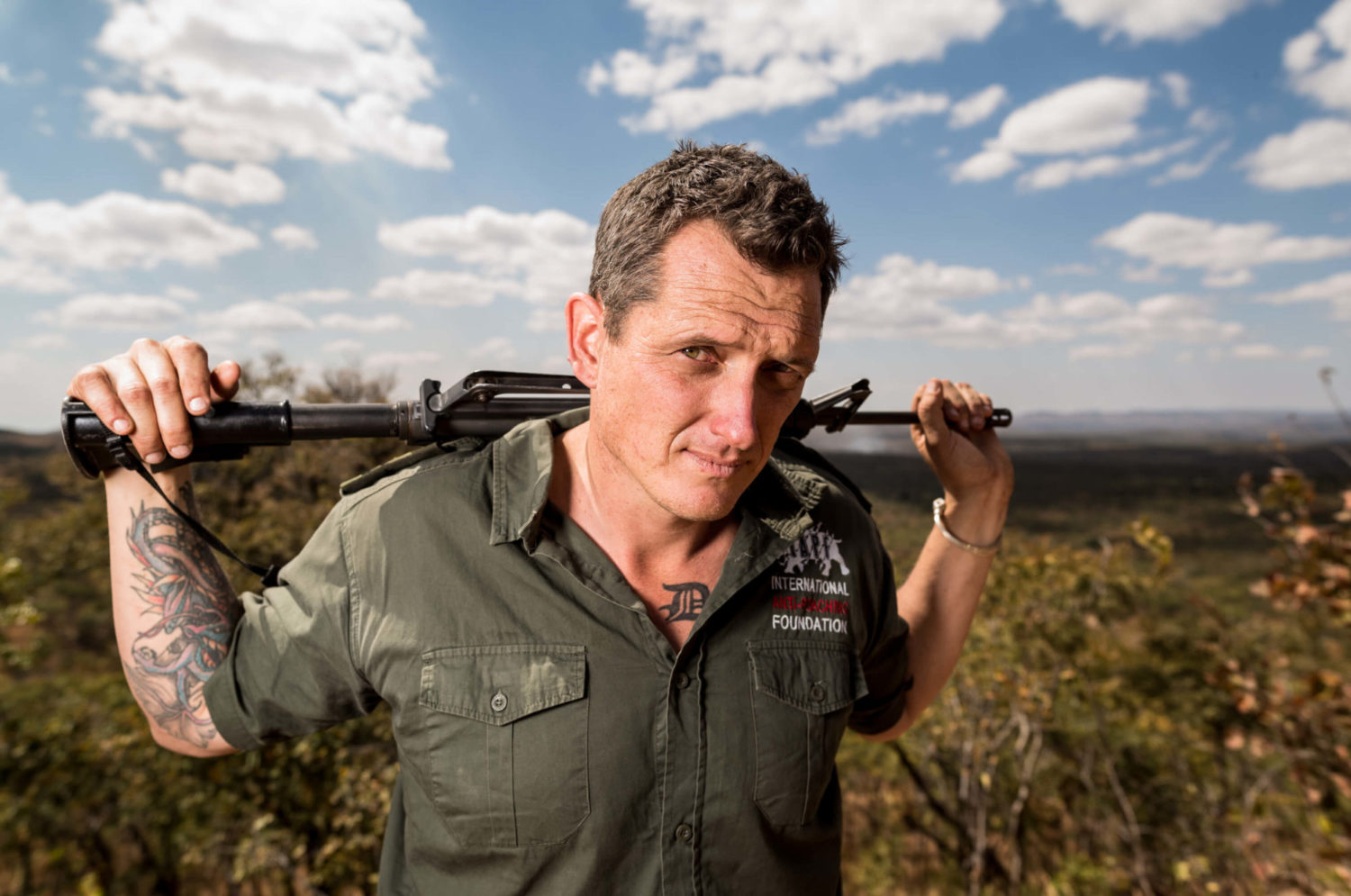
Inspirational keynote speaker and conservation advocate
Corporate leaders, security and emergency teams, conservation organizations, professional associations, and groups seeking insights on resilience, strategy, and ethical leadership.
How giving up everything, and breaking away from societies’ expectation can set you free to fulfil your true destiny
From 12 tours of Iraq and travel through more than 60 countries, Damien can recount numerous tales, lessons and methods to overcome many obstacles that life can throw at you
Conquering a fear of failure to graduate through some of the world’s most arduous military selection phases can only come with the acceptance of mistakes along the way. Some fatal. These are the school fees of life, not failure
If you chose not to follow anyone’s dreams but your own, it will require two things above all else: The belief that your concept is different and can effect change and the refusal to give up on making it reach its full potential.
The ability to operate a multinational organisation across three continents, with multiple cultures, languages and often in a hostile environment is not an online lesson or something university can prepare us
Damien Mander has lived a life defined by courage, adaptability, and purpose. Raised in Melbourne, he began his career as a garbage collector before rewriting his future through discipline and determination. At 19, he joined the Australian Defence Force and completed one of its most demanding qualifications to become a Clearance Diver. This achievement launched a career marked by resilience, precision, and an unwavering commitment to excellence.
After the September 11 attacks, Mander advanced into an elite counter-terrorism unit as a Special Operations Sniper, operating in some of the world’s most volatile environments. His role required strategic clarity, rapid decision-making, and mission-focused leadership. He later deployed to Iraq as a private security contractor, ultimately project managing the Iraq Special Police Training Academy, where he oversaw paramilitary development and troop deployment. These experiences shaped his global perspective and deepened his understanding of responsibility, ethics, and the cost of conflict.
Mander’s story then took an unexpected turn. After witnessing the toll of war and the vulnerability of the natural world, he redirected his life toward wildlife conservation. Today he is a respected speaker whose work bridges military precision with environmental purpose.
Damien Mander has lived an extraordinary life for his 37 years. From humble beginnings as a garbage collector in Melbourne, he transformed his future by joining the Australian Defence Force at 19. Through sheer determination and resilience, Damien graduated from one of the military’s most arduous courses, becoming a Clearance Diver. This early achievement set the stage for a life dedicated to service, discipline, and excellence.
Following the tragic events of September 11, Damien’s path took a new and challenging direction. He became a Special Operations Sniper in an elite counter-terrorism unit, where his skills and bravery were tested in some of the most intense environments imaginable. His experiences in this role shaped his perspective on global security and personal responsibility, lessons he now shares with audiences worldwide.
Damien Mander’s journey continued as he transitioned into the role of a mercenary, deploying to Iraq. Among his many responsibilities, he Project Managed the Iraq Special Police Training Academy, overseeing paramilitary training and the deployment of troops. His leadership in this capacity highlighted his ability to adapt and excel in high-pressure situations, making him a sought-after speaker on topics ranging from military strategy to leadership under duress.
Damien Mander’s expertise is vast and multifaceted, rooted in his diverse experiences across military and paramilitary roles. His early career as a Clearance Diver in the Australian Defence Force honed his physical and mental resilience, skills that would become crucial in his later roles. The rigorous training and discipline required for this position are central themes in his talks, emphasizing the importance of preparation and perseverance in achieving success.
As a Special Operations Sniper in an elite counter-terrorism unit, Damien Mander’s responsibilities extended beyond marksmanship. He was involved in planning and executing high-stakes missions, often requiring split-second decisions under extreme pressure. This role developed his strategic thinking and situational awareness, skills he now translates into powerful messages on leadership and decision-making in his speaking engagements.
Damien Mander’s time in Iraq as a mercenary and Project Manager at the Iraq Special Police Training Academy provided him with a unique perspective on international security and crisis management. He was responsible for overseeing the training and deployment of paramilitary forces, a role that demanded exceptional leadership and organizational skills. His firsthand experiences in conflict zones offer invaluable insights into the complexities of modern warfare and the human capacity for resilience.
Beyond his military accomplishments, Damien is a passionate advocate for wildlife conservation. He founded the International Anti-Poaching Foundation (IAPF), leveraging his skills and experiences to combat wildlife crime. This transition from military to conservation highlights his adaptability and commitment to making a positive impact on the world. In his talks, he draws parallels between military operations and conservation efforts, inspiring audiences to think creatively about problem-solving and leadership.
Contact us at Speakers Inc and subscribe to our YouTube channel
This 3 minute 56 second report profiles a groundbreaking all-women anti-poaching unit safeguarding one of Africa’s largest remaining elephant populations. The segment opens with a ranger’s firm declaration that anyone harming wildlife in her area will be caught. Historically, anti-poaching teams were staffed by men recruited from distant regions to avoid local pressures. The innovation behind this unit lies in reversing that model and selecting women from the very communities surrounding protected areas. According to program leadership, women are far less susceptible to corruption and far more committed to protecting wildlife that they view as part of their community identity.
The piece then highlights the sheer toughness of the women who serve. One leader describes a past selection course involving 189 men, of whom only three remained after the first day. Six or seven years later, he ran the same course for women and found only three had withdrawn by day three, demonstrating remarkable endurance and determination.
Personal stories add emotional depth. One ranger describes escaping an abusive marriage and struggling to provide for her daughter. The opportunity to join the anti-poaching unit transformed her life, giving her financial independence, self-worth, and a sense of purpose. She expresses pride in her work and hopes to show that no job is reserved for men. A graduation moment underscores the empowerment and recognition these women now receive.
This extended interview explores Damien Mander’s transformation from Australian Navy Clearance Diver and Special Operations Sniper to founder and CEO of the International Anti-Poaching Foundation. He begins by describing his youth on Australia’s coast, where diving became both a passion and escape. Early entrepreneurial efforts salvaging fishing lures led him to professional diving and, eventually, military service. After joining the Navy and later an elite counter-terrorism unit, he completed sniper training and deployed for three years in Iraq.
Following Iraq, Mander spiraled into drugs, alcohol, and purposelessness before rediscovering direction through the emerging anti-poaching crisis. Seeking meaning, he traveled to Africa and began working with ranger teams in Zimbabwe. The stark contrast between the vast resources he had in Iraq and the minimal support available to rangers protecting biodiversity was a turning point. Convinced he could improve training and strategy, he founded the International Anti-Poaching Foundation in 2009, initially as a service provider and soon as a full conservation management organization focused on large landscapes rather than individual species.
He explains how intelligence networks, community relationships, and non-lethal human–wildlife conflict mitigation complement ranger patrols. He details measurable outcomes, including significant reductions in rhino and elephant poaching and major increases in wildlife populations. The conversation then turns to trophy hunting’s decline and the need for sustainable economic alternatives for communities living alongside wildlife.
No reviews available for this post.
Speaker fees can vary depending on factors such as expertise, demand, and event specifics. While some speakers may charge a flat fee for their services, others may have hourly rates. It’s best to discuss fee structures directly with the speaker or their representative to understand the pricing model.
Virtual speaking appearances can indeed offer cost savings compared to in-person events. Virtual speaking rates are often 10-50% cheaper than in-person rates due to factors such as reduced travel expenses and logistics. This makes virtual events a cost-effective alternative for organizations looking to book speakers within a budget.
Keynote speeches typically range from 30 to 90 minutes, with the duration determined by the speaker’s expertise, the event’s agenda, and audience preferences. Keynote speeches often include a combination of inspirational stories, practical insights, and actionable advice tailored to the event’s theme or objectives.
The scale of the event and audience size can indeed impact a speaker’s fee. Larger events with a broader reach or higher attendance may command higher fees due to increased exposure and demand. Conversely, smaller events or niche audiences may offer opportunities for more flexible pricing arrangements.
Travel expenses such as transportation, accommodation, and meals are typically negotiated separately from the speaker’s fee. These costs vary depending on the speaker’s location, travel distance, and event duration. It’s important to clarify travel arrangements and expenses during the booking process to avoid misunderstandings.
Many speakers require a deposit to secure a booking, with the remaining balance due closer to the event date. Deposits are often non-refundable and serve as a commitment from both parties. It’s advisable to discuss deposit requirements and payment terms with the speaker or their representative when finalizing the booking.
Ready to find the perfect speaker for your event? Use our advanced search feature or contact us to get started today!







No results available
These remain the property of its owner and are not affiliated with or endorsed by Speakers Inc.
All talent fees exclude VAT, travel and accommodation where required.
Our Mission
Our Mission:
© All rights reserved 2026. Designed using Voxel