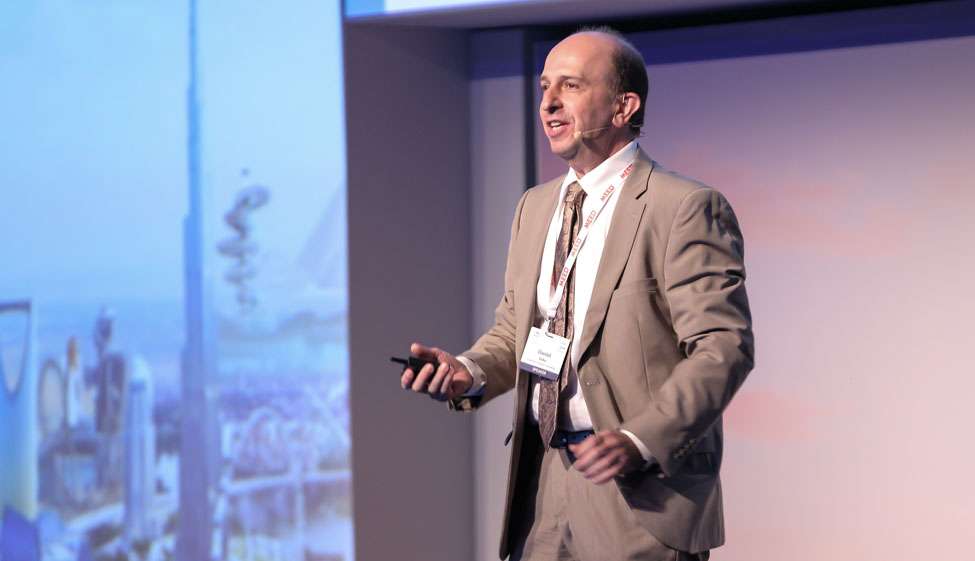
Political economist, futurist, and keynote speaker.
Corporate leadership teams, conference delegates, financial services, industry associations, policymakers, and organizations requiring geopolitical and economic insight.
South Africa’s Tough Choices in a Crucial Year Ahead
As South Africa approaches its most unpredictable national election since the dawn of democracy in 1994, the governing ANC is staring down multiple concurrent crises.
These include, severe electricity blackouts, stagnating economic growth, ailing infrastructure, limited state expenditure and rising public debt. With an electoral majority no longer assured, the ANC will be under pressure to shift economic policy and ideology while attempting to safeguard and manage those increasingly frustrated by persistent unemployment and lack of opportunity.
With expenditure outstripping revenue, the ability to kickstart growth through capital expansion is increasingly limited. The next 12 months is clearly a potential tipping or turning point for the country and requires both balanced and insightful analysis.
An essential conference or event keynote now open for booking.
A flagship deep-dive into both the political and economic fortunes of South Africa with prospects and insights in a crucial election year.
International & Domestic Challenges facing the Nation
Since the pandemic, South Africa’s economic recovery has underperformed its peers as a power crisis and policy stagnation stymies growth.
However, South Africa is not an island unto herself. There are numerous global factors that are influencing our financial well-being. Rapidly rising US interest rates and the USD$ alongside stubborn inflation poses a risk across the world.
Rising debt levels will constrain many developing economies while geo-political fragmentation and shifting global power place pressures on foreign policy goals – of which the Russia/Ukraine invasion plays its part. Commodity prices have been strong but softer Chinese growth can offset this.
The critical question is whether South Africa’s political leadership can make courageous moves to revive the economy amidst both international volatility and rising internal political conflict as Election 2024 looms large.
An always-fresh global macro economic and political overview providing the international context for South African economic challenges.
Can South Africa find its ‘On-Switch’?
South Africa confronts numerous concurrent crises, With global growth still subdued alongside persistent inflation and high interest rates, it’s the electricity crisis that really depresses domestic GDP figures which remain disappointingly low.
Silke fearlessly acknowledges the challenging road ahead for the country, grappling with policy indecision, policing inadequacies implementation inefficiencies and the urgent need to reforming struggling state-owned enterprises.
This keynote therefore provides an overview of the latest economic data and projections for the near future as both Government and the business sector seek new ways to stabilise ailing services prior to a crucial national election looming in 2024.
Silke’s keynote offers essential insights into the promise and pitfalls that lie ahead as the country moves towards the polls.
A comprehensive analysis of the current economic and political state of South Africa offering an expert prognosis on the prospects for stability and progress.
Political, Economic, Social & Technological Themes to Shape the Next Decade.
Profound political, economic, social and technological change have all been transformational features of the world for decades. Today, these big themes are clearly evident affecting business strategy, investments and the future of humanity at an increasingly rapid pace.
The world is moving towards political fragmentation as new groupings of countries exert their economic clout. Demographics are transforming Africa to be the world’s youngest continent while ageing populations in the West and China require enhanced state assistance.
Technology and AI are causing new ethical and security dilemmas alongside immense potential while climate change challenges weigh on sustainability outcomes and migration challenges.
With the developing world urbanising at record rates, health resources remain critical to human well-being while new battlegrounds over rare-earth minerals emerge. Don’t miss this all new 2023 revisit of the expected MegaTrends for the near future – as compelling and entertaining as ever!
Entertaining and Insightful macro-trend & theme analysis ideal for any event requiring a ‘helicopter’ or ‘futurist’ overview and suitable for all audiences.
Recognising & Responding to Rising Political and Economic Risk.
The world is today grappling with a multitude of geopolitical risks that have far-reaching consequences for business.
The Russian invasion of Ukraine alongside tensions between the USA and China only serve to amplify the prevailing atmosphere of uncertainty and fragmentation, as geopolitical power struggles draw in all nations.
The ripple effects of this rivalry are increasingly seeping into the realm of business, finance and trade, further complicating matters as globalisation gives way to regionalisation and friend-shoring. Geo-political influence, economic warfare, sanctions, critical supply chain constraints and protectionism are all already having an impact.
Factors such as inflation, interest rates, debt, currency and foreign relations have become increasingly vulnerable to these uncertainties. In addition, the impact of climate change, demographic shifts, rapid urbanisation and new technologies create challenges and opportunities.
It is therefore essential to identify the core risk factors as part of comprehensive planning strategies for the future.
An invaluable platform to identify explore Global Risk and the strategic choices necessary for a variety of businesses to survive in a challenging environment
Designed to focus specifically on the prevailing trends in the Consumer and Retail sector, this keynote is part of Daniel Silke’s new “Global Impact” series that aims to provide a meaningful and relevant macroeconomic overview of current global conditions and assess the impact on the relevant sector.
Consumers are under pressure. Rising inflation has dampened spending patterns forcing retail to react and reassess.
With interest rates still high and utility charges on the rise, shoppers are tightening their belts – with the exception of a healthy luxury sector. But, consumer demand is shifting – and its markets like India and Vietnam likely to set a new agenda as China struggles to gain traction.
A more ‘bespoke’ keynote offering which combines current economic data with industry specific issues and provides an ideal macro backdrop for further conference discussion and analysis.
May be customised within the South African or global context.
Daniel Silke is a leading South African political economist, futurist, and keynote speaker known for translating complex geopolitical and economic trends into clear, actionable insights. As Director of the Cape Town–based Political Futures Consultancy, he advises corporations, industry bodies, and executive teams seeking clarity on global risk, regional dynamics, and the forces reshaping competitiveness in volatile markets. His presentations are recognized for their accessibility, rigor, and ability to connect macro shifts to on-the-ground strategy.
Silke holds a Master’s degree in South African and International Politics from the University of Cape Town. His early career included influential academic work at the Institute for the Study of Public Policy and tutoring within UCT’s Department of Political Studies. He later served in public office as a Member of the Western Cape Provincial Parliament and as a Cape Town City Councillor, where he chaired the economic development portfolio committee and gained direct experience in governance, policy, and economic development.
For more than 15 years, Silke has been a trusted voice on global, African, and South African affairs. His commentary appears widely in the media, and his corporate keynotes and workshops are sought after by conference organizers across industries.
Daniel Silke is recognized as one of South Africa’s foremost political economy analysts, futurists, and compelling keynote speakers. His unique blend of economic acumen and political insight delivers presentations that are not only accessible but also deeply insightful. As the Director of Political Futures Consultancy in Cape Town, Silke has garnered acclaim for his outstanding keynotes and workshops tailored for the convention, conference, and events industries. With over 15 years of experience, Silke has become a sought-after authority on global, African, and South African political and economic trends.
Silke’s academic background is formidable, holding a Master’s degree from the University of Cape Town in South African and International Politics. During his academic tenure, he contributed significantly to the Institute for the Study of Public Policy, where he also engaged in tutoring within the Department of Political Studies. Transitioning from academia to public service, Daniel Silke served as a Member of the Western Cape Provincial Parliament and as a City Councillor in Cape Town. In these roles, he held pivotal positions including whip for his party and chair of the economic development portfolio committee.
Daniel Silke’s expertise lies at the intersection of politics and economics, making him a dynamic and sought-after speaker for a variety of events. His academic foundation, coupled with his practical experience in both public service and consultancy, gives him a comprehensive understanding of complex geopolitical landscapes. Silke’s ability to distill intricate concepts into clear, actionable insights makes him invaluable to audiences seeking to navigate the ever-changing global landscape.
Daniel Silke’s presentations are characterized by their engaging delivery, blending data-driven analysis with compelling storytelling. Whether addressing large audiences at conferences or facilitating intimate workshops, he has a knack for capturing and maintaining the audience’s attention while imparting knowledge that is both informative and thought-provoking.
Contact us at Speakers Inc and follow us on Facebook
This 5 minute 55 second introduction features Daniel Silke presenting the full scope of his keynote speaking work for corporate, conference, and global clients. He begins by positioning himself as an independent political analyst and keynote speaker serving major South African and international organizations, including financial institutions, technology firms, and multinational corporations. Silke emphasizes his track record delivering presentations to large conferences, intimate boardroom settings, and a broad cross section of professional events.
He explains the two core pillars of his expertise. The first is South Africa’s political and economic trajectory. Silke outlines his integrated approach that combines political analysis with economic performance, noting that the country’s political landscape is shifting toward greater fragility for the ruling party. This instability creates new scenarios, and Silke is one of the few analysts who addresses both political behavior and economic direction in a unified framework. His keynotes explore the evolution of South African politics, economic progress and regression, and the implications for long-term national outlook.
The second pillar is global analysis. Silke delivers a keynote titled The State of the World, which assesses global volatility, the drivers of instability, and how organizations can prepare for emerging risks. He expands this work in a separate keynote based on his new book, Tracking the Future, which examines global political, economic, technological, and social trends expected to shape the next decade and beyond. Silke highlights the influence of China, the shifting balance between Western and Asian power, technological disruption, demographic change, and rising citizen expectations.
This 46 minute keynote opens with Daniel Silke addressing TransUnion in Johannesburg, blending humor with a clear-eyed realism about South Africa’s current position. He frames the presentation around the bad, the ugly, and ultimately the hopeful, grounding the conversation in global uncertainty before turning to South Africa’s economic and political realities.
Silke outlines the polycrisis backdrop affecting all nations: climate stress, persistent inflation, geopolitical instability, the Russia-Ukraine war, and shifting power blocs. He emphasizes how global monetary policy, especially U.S. interest rates, directly influences South Africa’s currency, inflation, and growth prospects. Several international economies outperform South Africa, particularly India and select African markets, illustrating both competitive pressure and regional opportunity.
Transitioning to the domestic picture, Silke describes the cumulative impact of load shedding, weak growth, and constrained state capacity. South Africa’s GDP remains far below its potential, unemployment is entrenched, and household spending power continues to erode due to rising input costs. He notes, however, that resilience is visible: the country has avoided recession despite severe headwinds, and recent inflationary trends show early signs of improvement.
Closing on a message of guarded optimism, Silke encourages business leaders to remain engaged. Despite volatility, South Africa retains a population of 60 million seeking stability, opportunity, and improved services. Silke argues that the country is “in the darkness before dawn” but that realistic hope, structural shifts, and active partnership can begin to turn economic and political indicators upward.
Overview of User Reviews for Daniel Silke's Presentations
Daniel Silke has received consistently high praise for his keynote presentations, particularly regarding his deep understanding of the South African political landscape and macroeconomic realities. Reviewers highlight his ability to deliver complex topics in an engaging and accessible manner, captivating audiences with both the content and his delivery style.
Strengths:
Weaknesses:
Overall, Daniel Silke…
Speaker fees can vary depending on factors such as expertise, demand, and event specifics. While some speakers may charge a flat fee for their services, others may have hourly rates. It’s best to discuss fee structures directly with the speaker or their representative to understand the pricing model.
Virtual speaking appearances can indeed offer cost savings compared to in-person events. Virtual speaking rates are often 10-50% cheaper than in-person rates due to factors such as reduced travel expenses and logistics. This makes virtual events a cost-effective alternative for organizations looking to book speakers within a budget.
Keynote speeches typically range from 30 to 90 minutes, with the duration determined by the speaker’s expertise, the event’s agenda, and audience preferences. Keynote speeches often include a combination of inspirational stories, practical insights, and actionable advice tailored to the event’s theme or objectives.
The scale of the event and audience size can indeed impact a speaker’s fee. Larger events with a broader reach or higher attendance may command higher fees due to increased exposure and demand. Conversely, smaller events or niche audiences may offer opportunities for more flexible pricing arrangements.
Travel expenses such as transportation, accommodation, and meals are typically negotiated separately from the speaker’s fee. These costs vary depending on the speaker’s location, travel distance, and event duration. It’s important to clarify travel arrangements and expenses during the booking process to avoid misunderstandings.
Many speakers require a deposit to secure a booking, with the remaining balance due closer to the event date. Deposits are often non-refundable and serve as a commitment from both parties. It’s advisable to discuss deposit requirements and payment terms with the speaker or their representative when finalizing the booking.
Ready to find the perfect speaker for your event? Use our advanced search feature or contact us to get started today!







No results available
These remain the property of its owner and are not affiliated with or endorsed by Speakers Inc.
All talent fees exclude VAT, travel and accommodation where required.
Our Mission
Our Mission:
© All rights reserved 2026. Designed using Voxel